FBA inbound pallet guidelines for cleaner LTL and FTL receiving.
Use this warehouse-ready checklist to build Amazon FBA pallets that stay stable in transit, keep labels scannable, and avoid common dock rejections.
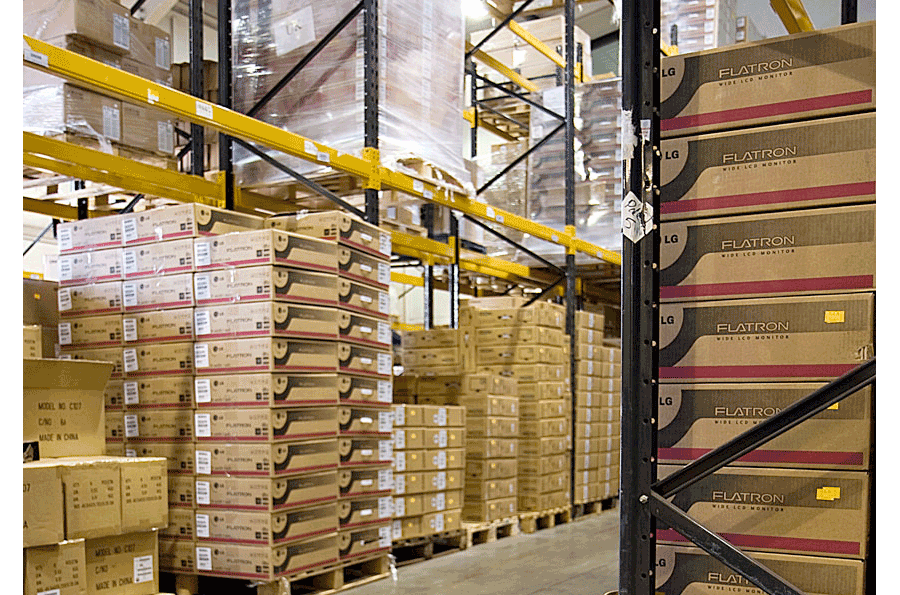
Build the pallet for Amazon receiving, not just for the truck.
A pallet can reach the fulfillment center intact and still fail receiving if the footprint, labels, box orientation, wrap, or shipment IDs are wrong. These are the checks to make before pickup.
1. Start with an acceptable pallet
- Use a 40 x 48 inch, 4-way access wooden pallet for standard FBA inbound freight.
- Use GMA Standard Grade B or better pallets; grocery, beauty, and health categories may require higher GMA grades.
- Do not use plastic, cardboard, particle board, broken, wet, moldy, or visibly damaged pallets.
- If one large unit cannot fit on the standard footprint without overhang, use a pallet sized for that unit and verify the shipment workflow.
2. Keep the load flush, stable, and separated
- Boxes should sit flush on all pallet edges with no carton overhang.
- Use an interlocking pattern when possible, and avoid tall unsupported columns that can shift in transit.
- Separate ASINs clearly so receivers can tell them apart without tearing down the pallet.
- For single-ASIN pallets, stack every case in the same orientation.
3. Respect height, weight, and box limits
- Keep total pallet weight at or below 1,500 lb, including the pallet base.
- Keep single pallets at or below 72 inches high, including the pallet, unless a single unit itself is taller.
- Plan for 6 inches of top clearance in the trailer or container and at least 3 inches between pallets.
- A single LTL shipment cannot exceed 5,000 boxes.
4. Prepare cartons before palletizing
- Every box on the pallet needs its own unique FBA shipment ID label.
- Do not photocopy, reuse, alter, or share a box label across multiple cartons.
- Place FBA box ID labels facing outward so Amazon can scan cartons without breaking down the pallet.
- Do not bundle shipping boxes with bags, elastic, or extra straps.
5. Wrap with clear stretch wrap
- Secure boxes to the pallet with clear plastic stretch wrap.
- Wrap the load and anchor the bottom passes to the top edge of the pallet so the stack moves as one unit.
- A practical warehouse pattern is heavier coverage at the top, full-body coverage through the middle, and a locked base pass.
- Do not bury barcodes beneath excessive reflective wrap or loose tails.
6. Put pallet labels where receivers can scan them
- Apply four FBA pallet labels: one on each side, outside the stretch wrap.
- Place labels squarely, not angled, near the top center of each side.
- Keep pallet labels visible to forklift drivers and receiving teams approaching from any side.
- Mark a pallet as a single-ASIN pallet when it contains only one ASIN.
Run this before the truck arrives
Take a few minutes here and you can prevent expensive repalletizing, rebooking, and inventory delays later.
Confirm the pallet base
Check size, 4-way access, GMA grade, dry wood condition, missing boards, loose nails, and category-specific pallet requirements.
Audit the carton layout
Look from all four sides and from above. No overhang, no mixed ASIN confusion, no inward-facing box labels, and no unstable top layers.
Verify measurements
Record finished pallet height, total weight, trailer clearance, and box count. Confirm the shipment is still valid in Send to Amazon.
Scan-test every label type
Check item labels when needed, box ID labels, and all four pallet labels after stretch wrap is complete.
Photograph the handoff
Capture height with a tape measure, all four sides, label closeups, pallet weight, top view for overhang, and the loaded trailer before departure.
Do not let the paperwork become the rejection.
LTL and FTL pallet shipments need more than a clean pallet. Make sure the carrier has Amazon reference IDs, shipment IDs, tracking or PRO numbers, and the correct bill of lading. For full-truckload and intermodal moves, record required seal details on the BOL.
Optimize your FBA inbound workflow.
Wizard-Industries helps teams create shipments, print labels, validate packed contents, and keep inbound warehouse work moving with fewer manual steps.